Guckenheimer’s R&D Engine
Nicholas Peters, Director of Culinary Innovation
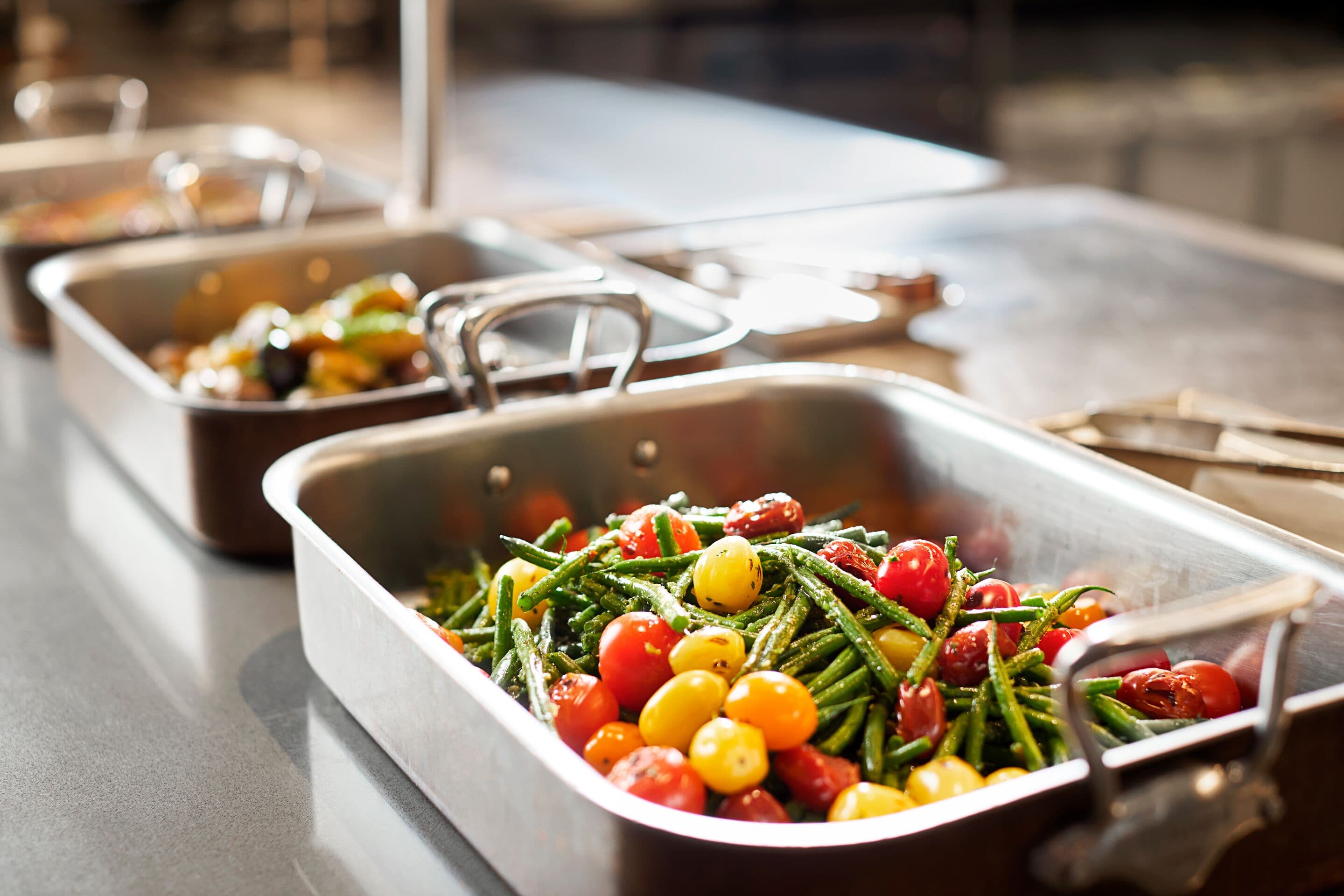
A behind-the-scenes look at how Guckenheimer’s f.i.t. Kitchen turns culinary ideas into scalable programs through rigorous testing, chef collaboration and future-focused innovation.
In our last look inside Guckenheimer’s f.i.t. Kitchen, we explored what the space is and why it matters: a creative hub where our chefs reimagine what’s possible in corporate dining. This time, I want to go deeper into the how. How ideas take shape, how trends turn into tested programs and how innovation moves from our test kitchen in South San Francisco into cafés across the country.
At its core, research and development (R&D) at Guckenheimer is about planning with purpose. It starts with understanding what’s happening in the industry, what our clients and guests are asking for and, critically, what they haven’t asked for yet.
From Insight to Idea
R&D doesn’t begin with a recipe, but rather with listening.
Sometimes that means identifying gaps — a cuisine, a format or a guest population that isn’t being fully supported. Other times, it’s about spotting emerging trends early and acting on them quickly, so guests don’t have to wait months to see what’s new in their café.
That near-term responsiveness is always balanced with long-term thinking. New ideas aren’t developed in isolation. We evaluate how trends fit within broader culinary frameworks already in motion, weaving them into programs that feel intentional rather than reactive.
Pressure-testing the Possible
Guckenheimer’s strength and expertise comes straight from our chefs. We have an incredibly talented, deeply engaged culinary community across the country, and our job in R&D isn’t to limit that creativity, but to support it.
Instead of handing down rigid directives, the f.i.t. Kitchen provides strong starting points: things like foundational recipes with cultural context and operational guidance. From there, chefs can adapt ideas to their market and teams while staying aligned with our standards.
I often think of it like a relay race. We’re not sprinting alone, but instead we’re handing off ideas so others can carry them forward in their own way. Before any concept reaches the field, it’s thoroughly tested by our team. We usually start by breaking a dish or trend down to its most fundamental level. What is it, really? Where does it come from? From there, we test, taste and re-build it to meet Guckenheimer’s expectations for execution, nutrition, sourcing and scalability.
Every detail matters, from purchasing considerations and allergen transparency to prep time and equipment requirements. Sometimes our job is to break a concept a hundred different ways so that when it reaches the field, chefs know they can trust it.
Scaling innovation is where things get real. Many new programs are piloted throughout a range of varied cafés so we can see how they perform under different conditions. Culinary and operational leaders are often on site during these launches, watching how teams interpret the program, how guests respond and where adjustments are needed.
Seeing something succeed in a test kitchen is one thing. Watching it come to life during live service and learning from that experience is what makes R&D so meaningful.
Every program that comes out of the f.i.t. Kitchen is viewed through a sustainability lens, from responsible sourcing and procurement to carbon impact and waste reduction. Plant-based options are intentionally included in every program, not as an afterthought, but as part of the foundation. Nutrition and sustainability often work hand in hand, shaping menus that are balanced, vegetable-forward and thoughtful without sacrificing flavor or satisfaction.
Innovation Powered by the Field
Some of our best ideas don’t start in the test kitchen at all but rather come from our chefs. Chef feedback is invaluable to our R&D process and, in many cases, innovation begins when a chef shares a regional favorite, a signature recipe or something they’re seeing resonate with guests locally. We test and validate those ideas, and when they meet our standards, we elevate them into national programs.
That two-way exchange is critical. Innovation shouldn’t be a small group creating for many — it should be a collective effort that reflects the strength of our entire culinary community. As corporate dining continues to evolve, so will the role of R&D.
Food technology will continue to play a growing role in how we innovate, including energy-efficient equipment and smarter cooking systems that meet the changing needs of client environments. But these tools will never replace chefs. They’re there to support them, helping our teams work more efficiently while preserving the integrity of the food.
At the end of the day, innovation means being willing to experiment, adapt and occasionally fail — and to learn quickly when we do. Not every idea will land perfectly the first time, and that’s okay. Progress comes from pushing boundaries, refining details and staying curious.
Innovation is about chasing what isn’t there yet — and that’s exactly where the f.i.t. Kitchen thrives.
You might also be interested in
Bringing MENA Flavors to the Workplace Café
See how Guckenheimer's culinary test kitchen turns Middle Eastern and North African (MENA) cuisine into shareable, chef-crafted workplace café experiences guests crave.
Read more
What a Great Hotel Knows that Most Workplaces Are Still Learning
Shifting from a task-based to a hospitality-first approach to workplace facility management doesn’t happen by accident.
Read more
Guckenheimer Earns Top Protein Sustainability Ranking for Fifth Consecutive Year, Exceeding Goals and Outpacing Industry
A+ rating from Humane World for Animals reflects sustained progress in reducing animal protein reliance and embedding climate goals into workplace dining operations
Read more