How Sustainable Menus Come to Life at Scale
Ines Cheng, MS, RDN, Senior Food and Nutrition Strategy Manager
A look at how a variety of small decisions can lead to meaningful sustainability impact across entire organizations.
What does a “sustainable menu” actually look like in practice?
It’s a question we hear often, and one that doesn’t have a single answer — because sustainability in food isn’t one decision or one ingredient, but rather a series of choices made across sourcing, menu design, culinary creativity and day-to-day operations. And when done well, those choices don’t just reduce impact — they enhance the guest experience and unlock new ways of thinking about food at scale.
Starting With What’s in Front of You
At its core, building a sustainable menu is about paying attention. In many cases, the biggest opportunities aren’t found in entirely new ingredients or concepts, but in what’s already happening in your kitchen. Where is waste occurring? What ingredients are underutilized? What patterns are emerging in guest behavior?
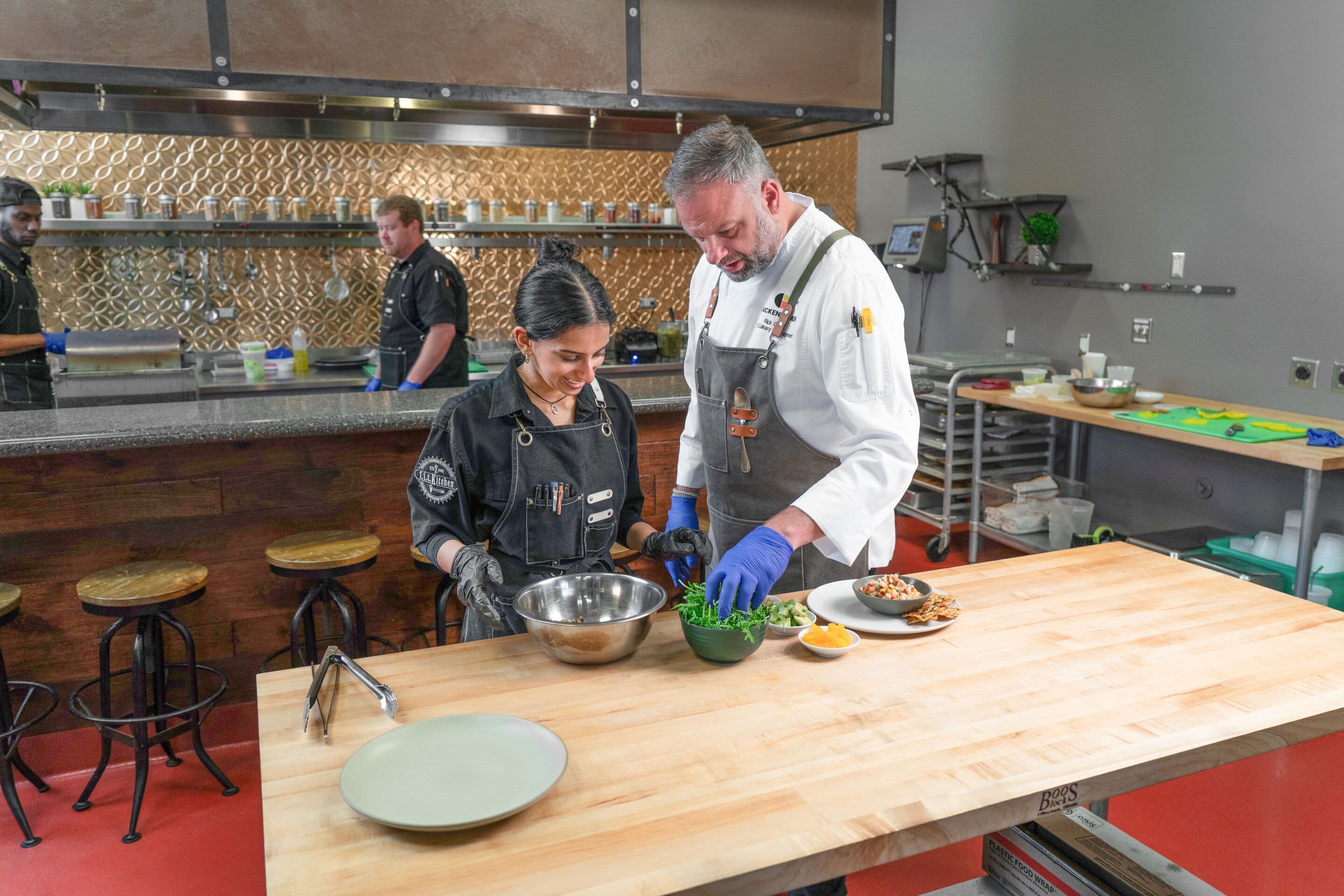
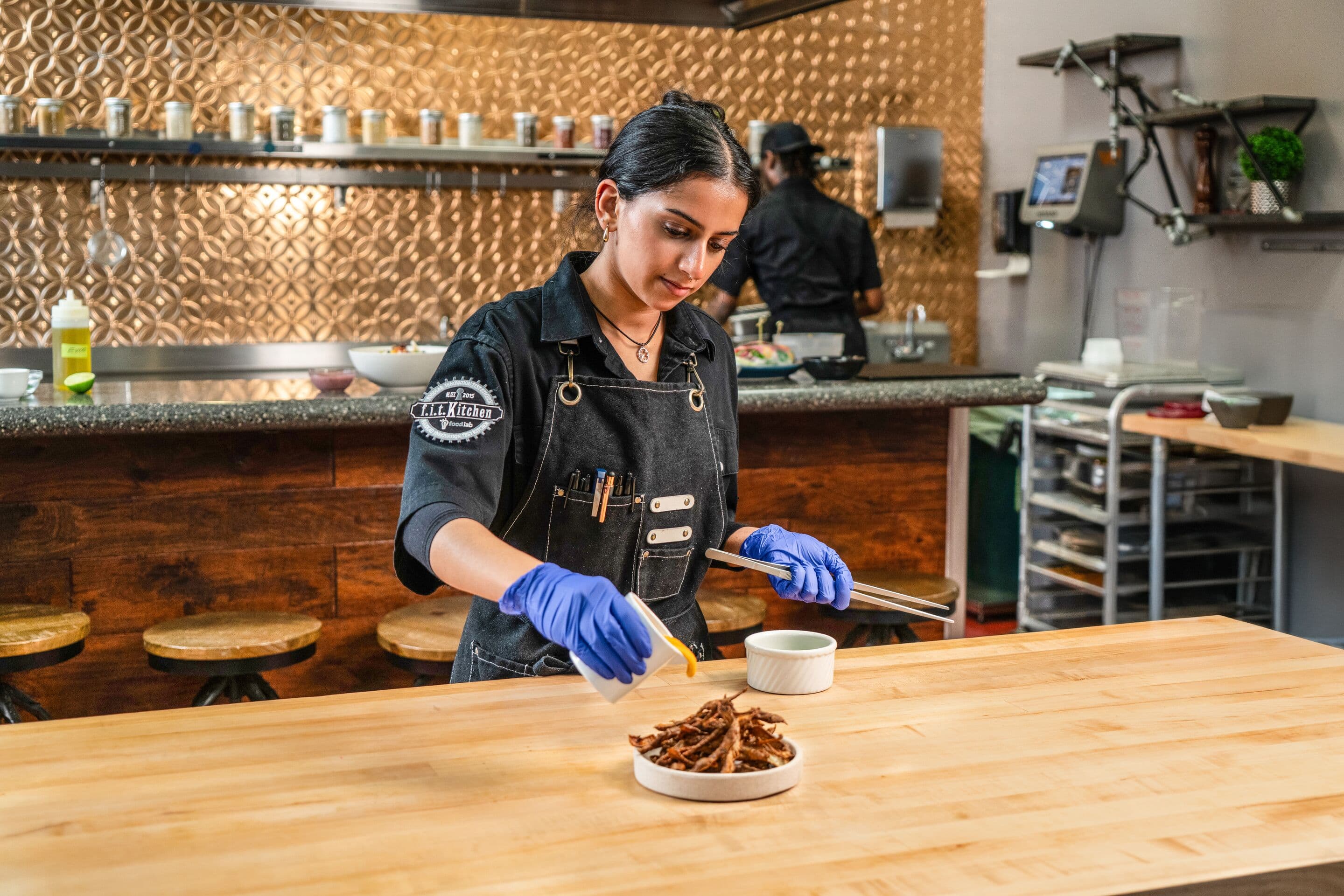
We’ve seen this play out in simple but powerful ways. Excess bananas from pantry programs become smoothies or banana bread or asparagus trimmings transform into house-made stock. These aren’t just creative exercises but operational decisions backed by data, often surfaced through tools like Winnow, that help teams understand exactly where waste is happening and where new opportunity exists.
Sustainability, in this sense, isn’t added on. It’s uncovered.
Meeting People Where They Are
One of the biggest misconceptions about sustainable menus is that they require a dramatic shift in what people eat. But really, the most effective strategies are often the most subtle.
Rather than asking guests to completely change their habits, we focus on meeting them halfway. That might mean incorporating upcycled ingredients into familiar dishes or blending plant-forward components into meals that still feel recognizable and satisfying. It also means re-thinking how we talk about food.
Language plays a bigger role than many realize. Labeling a dish as “vegan,” for example, can unintentionally discourage someone from trying it, even if they might enjoy it. Simply presenting it as a flavorful, well-crafted dish allows the food to speak for itself rather than be subject to pre-existing assumptions.
Placement matters, too. Designing a station so that vegetables, grains, and high-fiber options come first naturally nudges guests to build a more balanced, and often more sustainable, plate before they even reach the protein. These are small shifts, but at scale, they add up.
The Challenge of Scale
Creating a sustainable menu in one location is an achievement, but scaling it across multiple sites is something else entirely. Every operation is different, with varying labor models, equipment and procurement capabilities. Even predicting what items will be left over and how it can be re-used requires a level of flexibility that doesn’t always align with traditional menu planning.
There’s also the human factor. Not every team has the same resources or bandwidth to experiment, adapt and execute new ideas. That’s why scalability isn’t just about replicating a menu, but also about building systems and cultures that support sustainable thinking — training teams, aligning operations and ensuring both the structure and flexibility needed to make it work already exist.
In some cases, that flexibility takes creative forms. Teams can re-purpose excess ingredients into new dishes with the understanding that they’re more improvisational, or workplace “family meals” can double as R&D spaces, where new ideas are tested internally before reaching guests.
These approaches create space for innovation without compromising consistency where it matters most.
A New Approach to Protein
Sustainability also challenges a long-standing assumption in food: that meat must sit at the center of every plate.
In the U.S., menus have traditionally been built around meat, with everything else treated as a side. But when we take a more holistic view, recognizing that grains, legumes and vegetables also contribute fully to protein goals, we open the door to new possibilities. This shift isn’t about removing choice but instead about expanding it.
It’s also where nutrition and sustainability begin to align more closely. The growing conversation around the importance of fiber is a good example. While protein has dominated food trends in recent years, fiber is emerging as an area of focus, and one that naturally supports more plant-forward eating patterns. For culinary teams, that creates an opportunity to re-think how dishes are composed, not just what they contain.
Pursuing Ongoing Sustainability
Sustainability can’t live in just one part of the operation — it has to be holistic. Menus matter, but so do procurement decisions, packaging choices, kitchen workflows and team engagement. Sustainability requires buy-in from the people bringing the food to life every day.
When culinarians are excited about what they’re creating, when they see sustainability not as a constraint but as a creative challenge, that energy translates directly to creating exceptional experiences with each meal.
You might also be interested in
What a Great Hotel Knows that Most Workplaces Are Still Learning
Shifting from a task-based to a hospitality-first approach to workplace facility management doesn’t happen by accident.
Read more
A Recipe for Zero-Waste Magic
Chef Almitra Williams and her hand-rolled carrot pappardelle with signature “caranara” sauce was recently named runner-up in Winnow’s #100RecipesFor100M global competition, celebrating chefs who have collectively driven more than $100 million in food waste savings.
Read more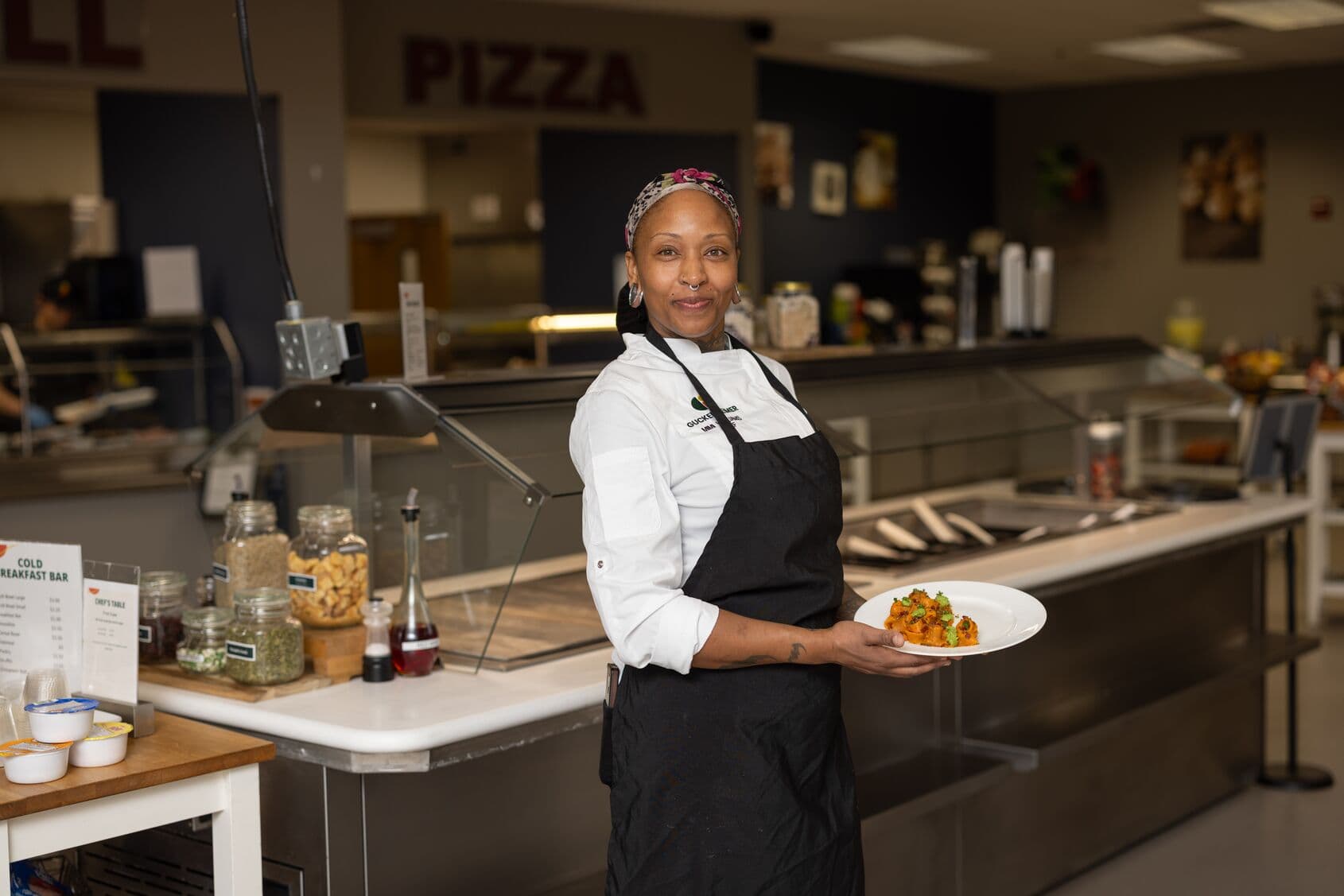
Data You Can Taste: How Analytics Shape What We Serve
Data and creativity aren't opposites in a great kitchen. Here's how we use guest feedback, waste analytics and menu insights to help our chefs do their best work.
Read more